 Armhanq.com ՀԱՅԱՍՏԱՆԻ ՀԱՆՔԱՐԴՅՈՒՆԱԲԵՐՈՒԹՅԱՆ ԵՎ ՄԵՏԱԼՈՒՐԳԻԱՅԻ ԱՍՈՑԻԱՑԻԱ
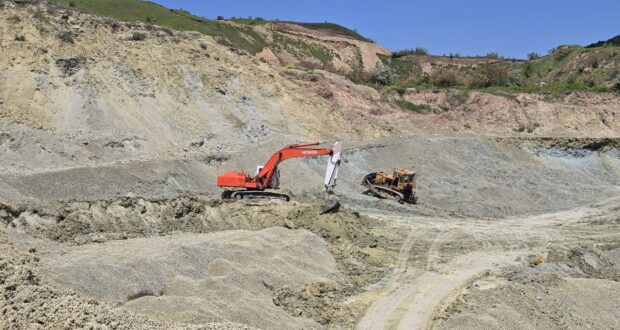
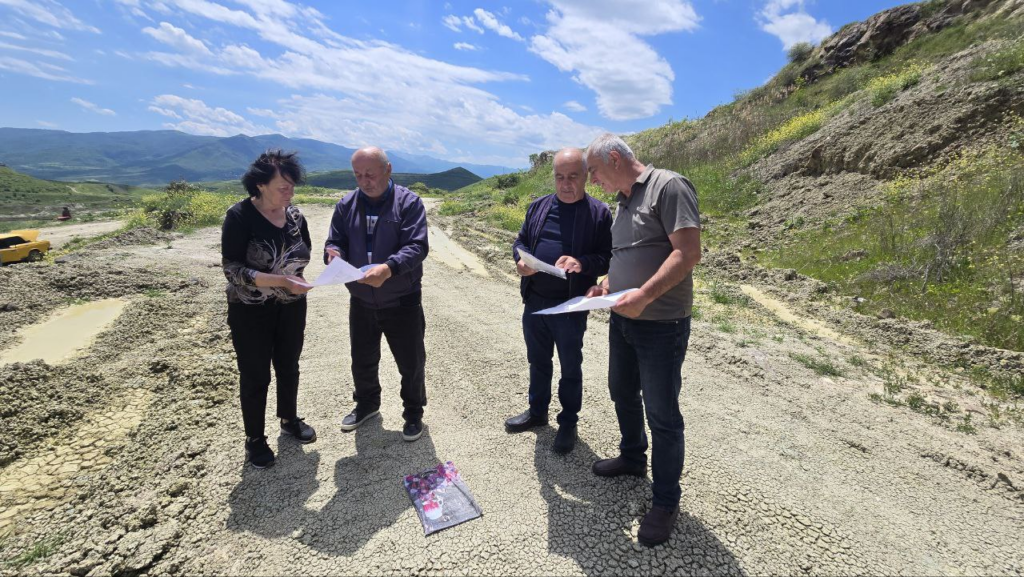
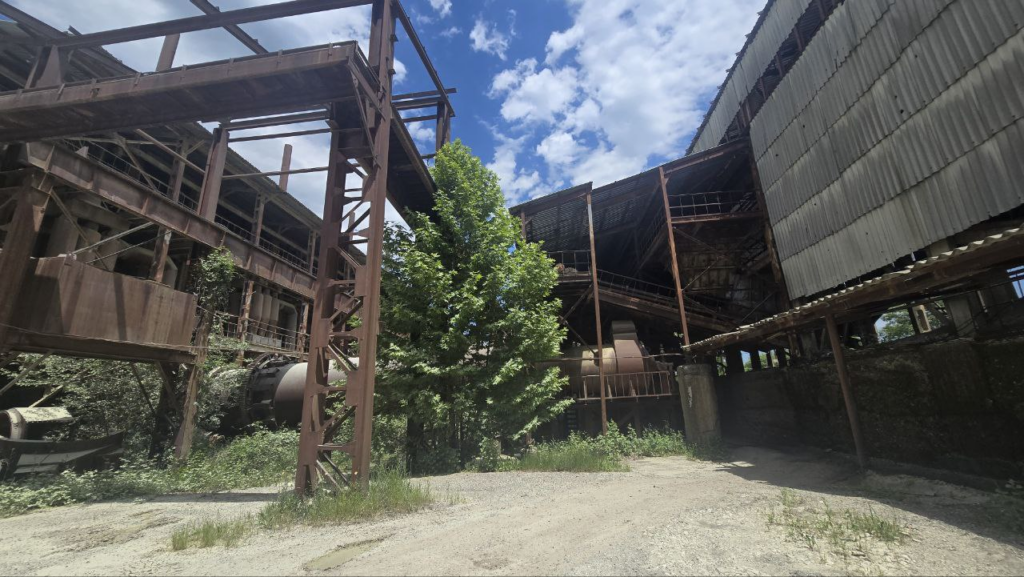
Representatives of the Armenian Mining and Metallurgy Association paid a working visit to the Ijevan “Bentonite” plant, one of the Union’s member organizations. During a meeting with employees, the issues facing the company were outlined, and a tour of the mine and the plant was conducted.
The plant produces bentonite clay, which contains iron, calcium, phosphorus, manganese, magnesium, sodium, and potassium. Bentonite powder and granulated bentonite clay are widely used in a variety of fields, including drilling operations, foundries, ferrous metallurgy, agriculture, wine production, construction, medicine, household applications, and as cat litter.
A More Than Tenfold Increase in Fees Raises Concerns
Since 2023, the annual mining license fee has increased from AMD 500,000 to AMD 10 million. Such an unjustified burden creates additional challenges for the company. Already operating under tight financial conditions, the company is struggling to allocate cash flows toward the acquisition of necessary modern equipment and the coverage of current expenses.
During the discussion, company employees asked the Union’s representatives to act as intermediaries in conveying the essence of the issue to state authorities, with a view to revising the approach to setting fees for non-metallic mines.
Artificial barriers to mine operations are the result of poor planning
The mine’s coordinates were changed as early as 2014, and as a result, the company has continued to face challenges, including its inability to fully operate the site.
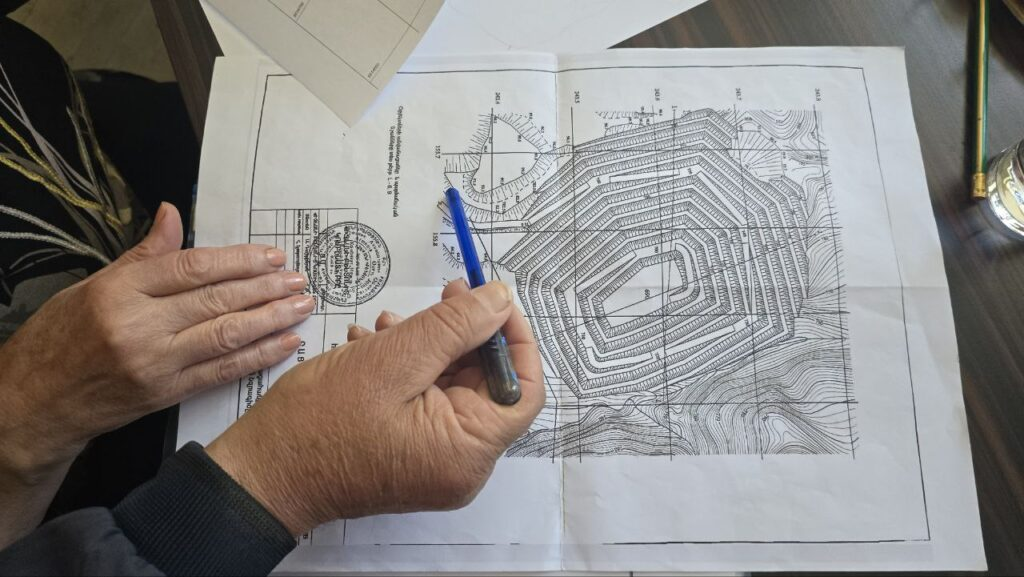
The problem is that, under the new project, the mining allotment was based on the previous one (with no errors in the original design); however, a wedge-shaped parcel of land has now been left within it. Despite being included in the area allocated under the license, the company is not permitted to operate this parcel.
Experts stated that the land in question is neither hazardous nor of historical or cultural significance. They believe there was no deliberate intent and that the coordinates were mixed up during the design process. However, this misunderstanding continues to impede the mine’s full-scale operations.

After consulting with Union members, it was decided to proceed with correcting the documents. At the first stage, the Geological Fund will be asked to supply all subsoil use–related documents, which will be copied, after which the re-documentation process will begin from the point at which the discrepancy occurred.
Disagreements Arise from the Introduction of Incomplete Regulations
Representatives of “Bentonite” also stated that they had been allocated a plot of land for waste disposal, which the company later transferred to local farmers.
The state subsequently allocated another site to the company; however, it has not been granted permission to use it, as the territorial authority does not consider it appropriate to provide that specific land parcel.

As a result, the company has a project but no contract and therefore cannot operate. The paradoxical situation has arisen not because either side is right or wrong, but as a result of a short-sighted approach by the relevant authorities, whereby relations are not regulated in a way that prevents contradictory provisions in decision-making.
Current Activities and Future Prospects
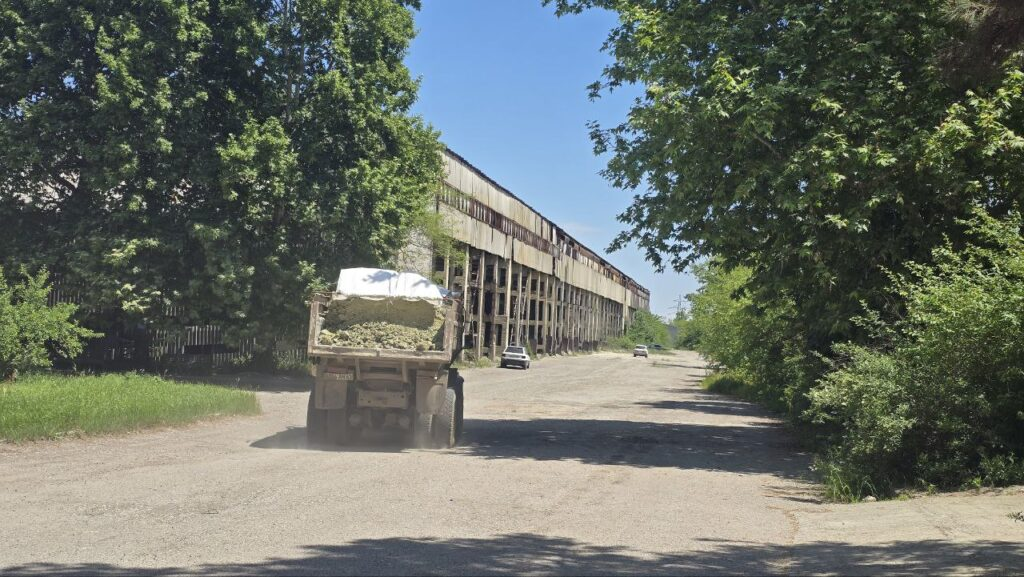
“Bentonite” has a yearly output of 300 tons; however, under more favorable conditions, production levels could be increased. Exports are primarily to Russia, with a smaller volume going to Georgia. The company could also produce fertilizers based on the raw material, but faces marketing and sales challenges.
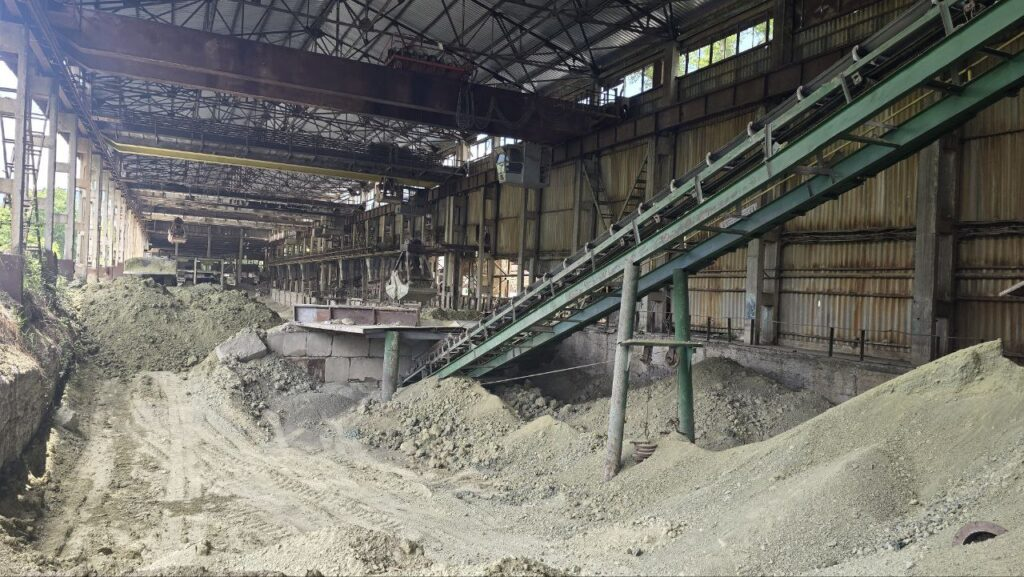
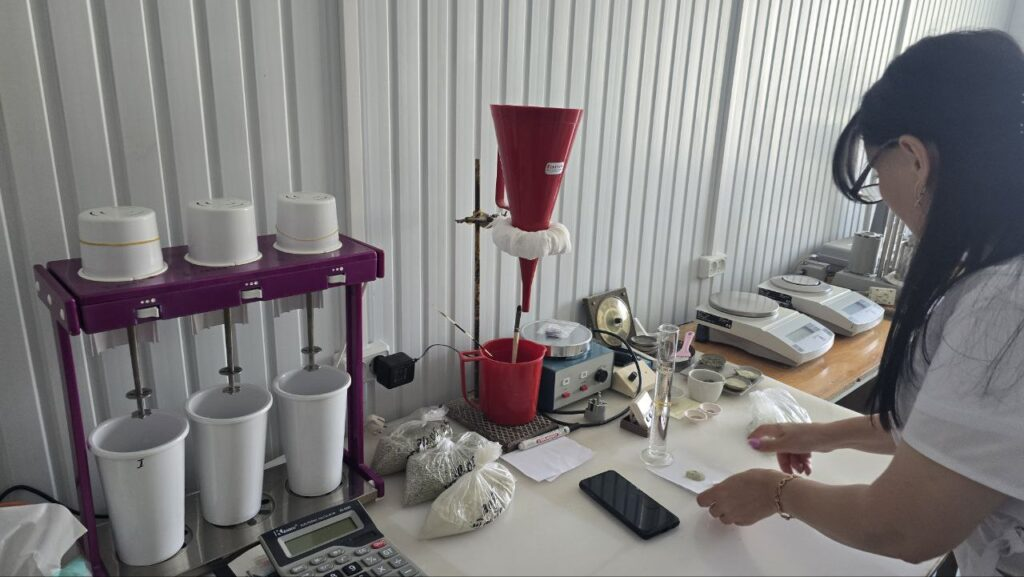
The plant’s chief mechanic, Volodya Matinyan, presented the production process: “We transport bentonite clay from the mine to the plant, where it undergoes the first stage of crushing. It is reduced to pieces measuring 5–10 cm, then transferred to a drying drum, where it is dried using hot air and directed to the grinding section. When producing powder, we use a ball mill. If the material is intended for household pet use, it is ground to the size of a grain of wheat, sieved, and packaged.”

Matinyan demonstrated the sorted bags, noting that the powder is transported by compressed air into 500-cubic-meter silo towers and packed into bags ranging from one ton to 25–40 kilograms.
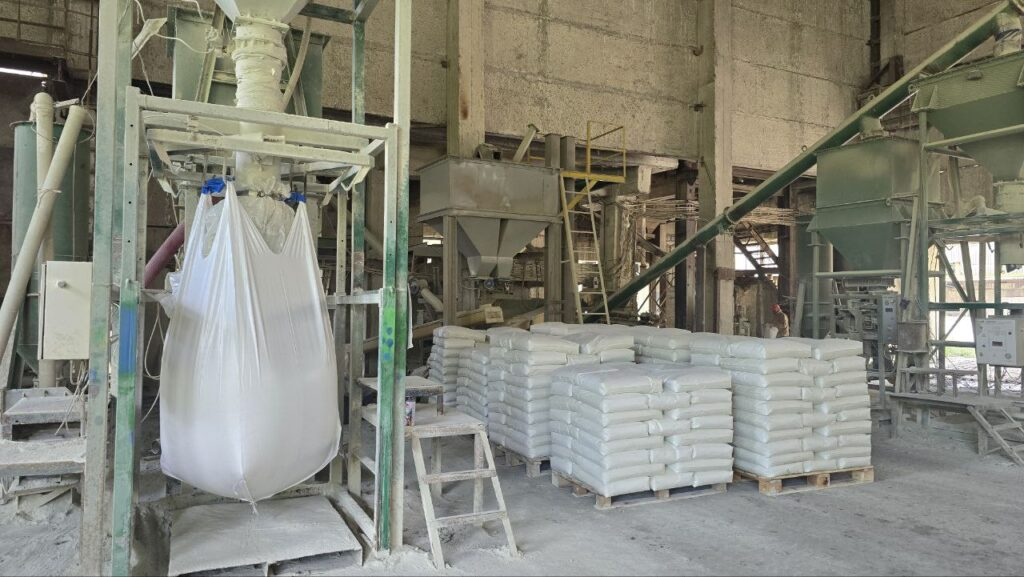
“The powder is primarily used for oil well drilling. We create a solution that fulfills both cooling and strengthening functions in the borehole. In foundries, it is used for mold production, resulting in a smoother surface of the manufactured metal.” “They are also used as feed additives to aid the digestion of pigs, poultry, and other animals. The granulated form is primarily used as cat litter in households, as it absorbs unpleasant odors,” he explained.
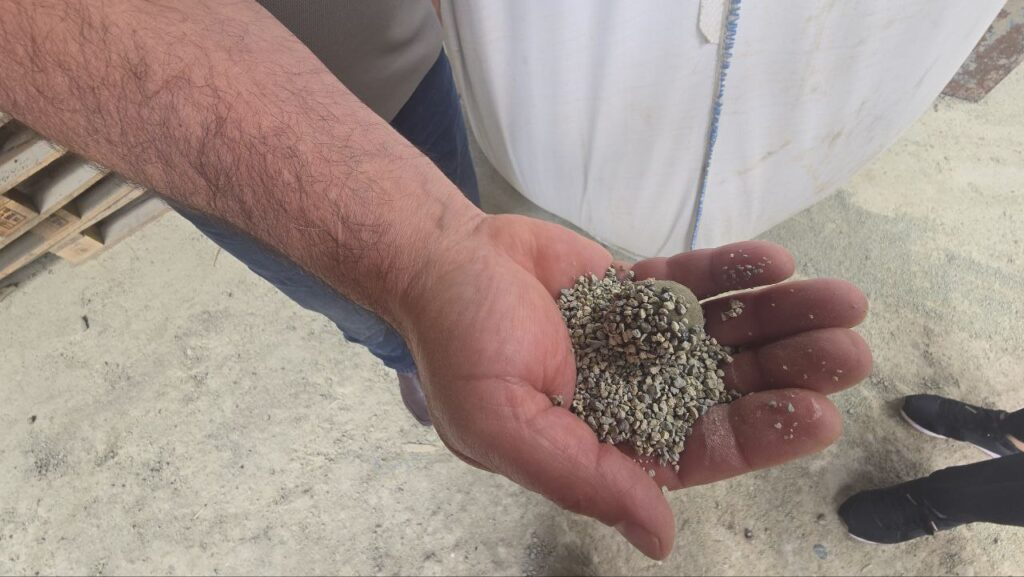
At the mine site, Nariman Manucharyan, mine manager of the Ijevan Bentonite Plant’s Sarigyugh bentonite clay deposit, stated that operations are carried out in areas dating back to the Soviet period, with no additional land plots being acquired. “There is no dust here, and the environment is not polluted. We have an expert conclusion from the Ministry of Environment.
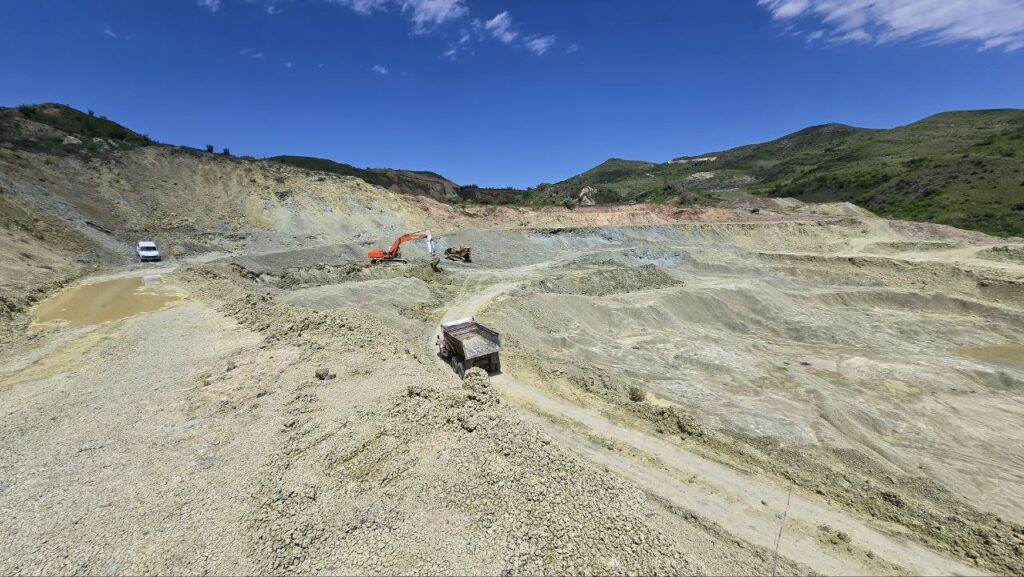
We extract bentonite clay and transport it to the plant for processing. Heavy machinery operates at the mine, including excavators, bulldozers, and transport vehicles.
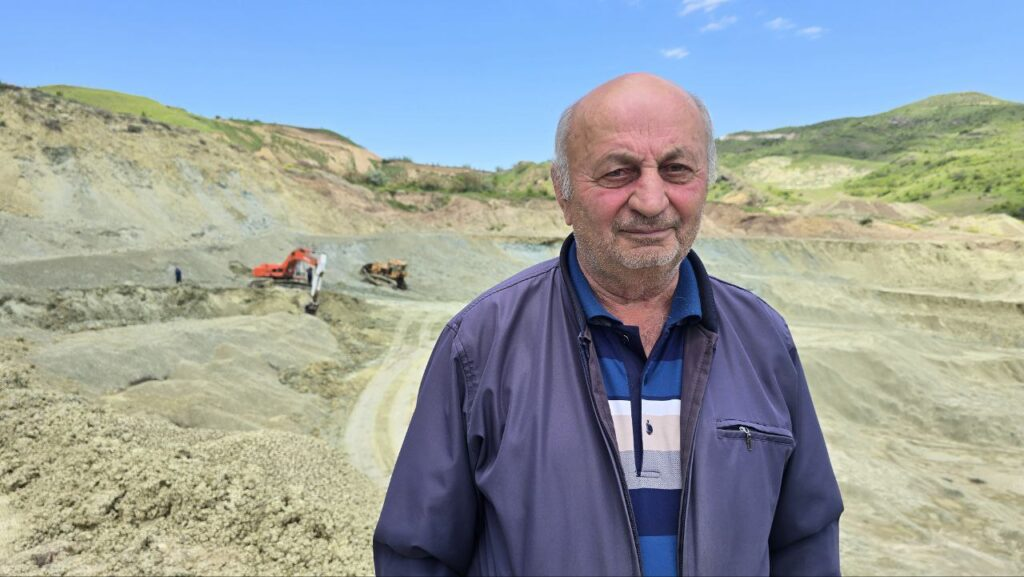
We plan to increase productivity, acquire more powerful equipment, and hire more employees. Currently, we have around 120 employees,” Manucharyan said.
The Ijevan “Bentonite” Plant was established in 1967. The mineral has significant economic importance. Bentonite liners and mats are widely used for waterproofing the bottoms and walls of canals, reservoirs, artificial lakes, and tailings storage facilities.
Owing to its swelling properties, bentonite prevents water from penetrating soil and groundwater, protecting them from contaminants and waste. It is durable, environmentally friendly, and suitable for use in applications involving drinking water.
It is used in the production of concentrated animal feed, as it contains essential minerals and enhances animals’ resistance. In winemaking, it absorbs harmful substances, acting as a natural filter. It helps retain soil moisture and is applied in the production of vitamins, perfumes, fertilizers, and many other fields as a safe and beneficial raw material.