 Armhanq.com ՀԱՅԱՍՏԱՆԻ ՀԱՆՔԱՐԴՅՈՒՆԱԲԵՐՈՒԹՅԱՆ ԵՎ ՄԵՏԱԼՈՒՐԳԻԱՅԻ ԱՍՈՑԻԱՑԻԱ
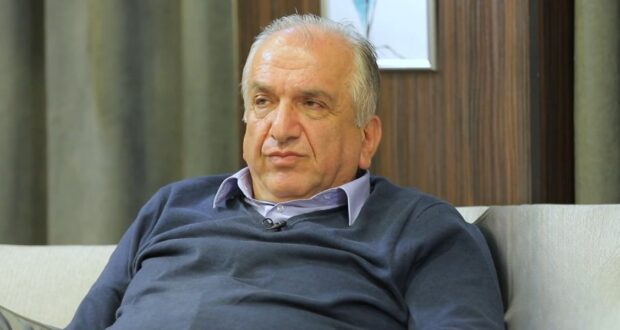
The specialist in the field, citing international experience, points to the prospects for Armenia’s development.
There is a widespread opinion that tourism and mining are fundamentally incompatible sectors: the first is based on nature conservation, aesthetic values, and recreation, while the second is based on the exploitation of natural resources. However, modern international experience proves that this contrast is often exaggerated.
We talked about this topic with the head of the Department of Service at YSU, Candidate of Geographical Sciences, Associate Professor Seyran Suvaryan.
Industrial Tourism: A Newly Forming Direction
According to Seyran Suvaryan, industrial tourism is one of the developing types of modern tourism. “It includes visits to both historical industrial heritage sites and operating production complexes. In scientific literature, it is considered a tool for the revitalization of post-industrial areas and heritage management.”
According to him, this type of development is significantly influenced by international professional structures, such as “The International Committee for the Conservation of the Industrial Heritage” and “Society for Industrial Archaeology”, which contribute to the preservation of industrial heritage and its integration into the tourism sector.
Mining: from resource to heritage
S. Suvaryan believes that mining should be considered not only as an economic activity, but also as a system carrying scientific and cultural value. “Mining areas are carriers of important geological information. They can be considered as geological heritage, which includes both material and intangible components: technologies, professional knowledge and community experience.”
He emphasizes that the tourist use of such areas requires a comprehensive approach, ensuring:
- safety,
- scientifically based interpretation,
- preservation of authenticity,
- effective risk management.
International experience: models of successful combination
However, as the specialist emphasizes, this combination is possible only when the principles of sustainable development are maintained, effective management is implemented, and a scientifically sound approach is ensured.
Source: abnewsAccording to the specialist, international experience clearly shows that mining and tourism can be effectively combined.
Such examples include:
- “Zollverein Coal Mine Industrial Complex” (Germany) – a former industrial complex that has been transformed into a cultural and tourist center and is included in the UNESCO list,
- “Wieliczka Salt Mine” (Poland) – a unique underground tourist complex,
- “Big Pit National Coal Museum” (Wales) – a museum-turned-mine with experiential excursions,
- “Falun Mine” (Sweden) – an example of geological heritage preservation,
- “Chuquicamata” (Chile) – an operating mine where supervised visits are carried out,
- “Hashima Island” (Japan) – a touristic reinterpretation of an abandoned industrial site.
According to Mr. Suvaryan, “these examples can be classified into three main models: museumization, tourist use of partially operating mines and transformation of reclaimed areas.”
Modern tourism destinations: geological tourism and adventure tourism
According to the scientist, the combination of mining and tourism is especially effective in two main directions.
Geological tourism
The specialist in the field notes: “The scientific component is important here: the visitor should not only see, but also understand geological processes, prospects, the effects of economic and sustainable development, the history of the formation of the territory, etc.”.
Adventure tourism
According to S. Suvaryan, “man-made landscapes create a unique experiential environment, which arouses great interest among modern tourists”.
Sustainable development, globalization and glocalization
S. Suvaryan emphasizes that this combination should be considered within the framework of sustainable development. “The approaches of the UN World Tourism Organization require ensuring environmental, social and economic balance.
The application of global experience is important, but it must be adapted to local conditions, which is known as glocalization”.
Republic of Armenia. unrealized but promising potential
Industrial and mining tourism in Armenia is still in its early stages of development. Although there are significant resources:
- Soviet-era industrial infrastructure,
- operating and former mines,
- diverse mountain landscapes,
they are not yet fully integrated into the tourism system.
Suvaryan states that the regions of Vayots Dzor, Syunik and Lori have particularly great potential and adds: “Reclaimed and unused mines can serve as open-air laboratories, combining science and tourism.”
At the end of the conversation, Associate Professor Suvaryan states that mining and tourism do not necessarily have to be viewed as opposing sectors.
They can work together and complement each other:
- preservation of industrial heritage,
- economic diversification,
- creation of new tourism experiences.
However, as the specialist emphasizes, this combination is possible only when the principles of sustainable development are maintained, effective management is implemented, and a scientifically sound approach is ensured.
Source: abnews